

Why Do Finished Products Vary Every Day? The 5 Most Overlooked Processing Variables in Food Production
Contents
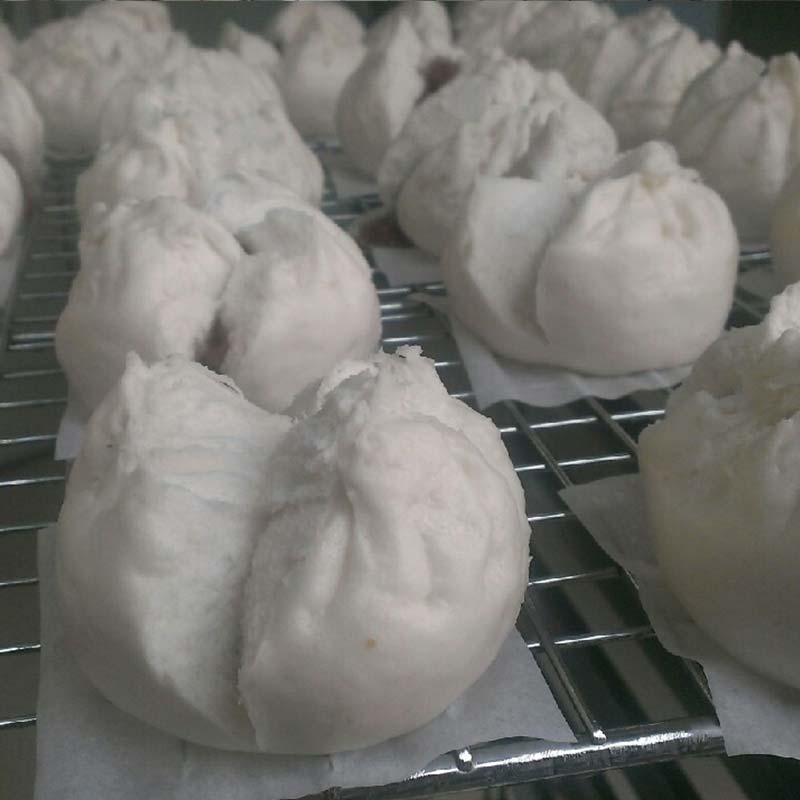
In a large-scale food production environment, even when the recipe, workflow, and equipment remain unchanged, product quality can still vary from day to day. Many manufacturers encounter situations such as:
The same production line and the same team may produce buns that are fluffy and full one day, but slightly flat the next; sometimes the surface is smooth, while other times it becomes rough or develops cracks.
The same production line and the same team may produce buns that are fluffy and full one day, but slightly flat the next; sometimes the surface is smooth, while other times it becomes rough or develops cracks.
1. Why do finished products vary daily even with the same recipe and equipment?
The challenge of mass food production is not simply “making the product,” but “making every batch consistent, every single day.”
The most common causes of inconsistency include:
• Climate conditions affecting dough and fermentation speed
• Inconsistent dough condition
• Non-standardized equipment settings
• Minor variations in dough hydration and temperature
As production volume increases, these small differences become amplified into major quality issues.
2. Variable 1: Temperature & Humidity — the “invisible changes” most food factories overlook
The environmental differences between summer and winter are often far greater than expected.
• Summer: Dough becomes softer; fermentation time shortens
• Winter: Dough becomes firmer; fermentation slows down
• Humidity changes: Affect dough hydration and surface condition
• Rainy days: Flour naturally carries higher moisture content
Even when using the exact same equipment, changes in the external environment increase the load on the fermentation cabinet, causing dough expansion rates to vary significantly.
3. Variable 2: Dough condition is highly sensitive — small changes in hydration, temperature, or resting time can completely alter the final product
Among all processing stages, the “dough condition” is often the most overlooked, yet the most critical factor affecting product quality.
Unlike equipment settings, its changes are subtle, but even minor deviations will directly affect appearance, texture, and expansion.
① Slight differences in hydration can completely change dough behavior
Many assume that a 1% difference in hydration won’t matter, but in mass production, that 1% is enough to alter the dough’s entire characteristics.
• More water: The dough becomes stickier, causing stretching during filling; the skin and filling do not adhere well.
• Less water: The dough becomes drier, leading to cracks and a rough surface after steaming.
These differences may seem small, but once inside the steamer, they become amplified and result in batches with inconsistent appearance and texture.
② Dough temperature is the variable most likely to “shift without warning”
Just a 1–2°C difference in dough temperature will change the fermentation rate.
This explains why:
• Buns made in the morning vs. evening often look different
• Expansion varies between sunny and rainy days
• Products often “won’t rise” in winter
Dough temperature acts like a “metronome for fermentation”—when the tempo changes, the outcome changes with it.
③ Inconsistent resting time sends each batch of dough into the bun forming machine under different conditions
Insufficient resting time means gluten hasn’t relaxed yet, making the dough feel “tough” and causing the skin to tear easily during forming.
Excessive resting time makes the dough overly soft, reducing its wrapping stability and increasing deformation after forming.
4. Variable 3: Non-standardized equipment settings — the primary cause of inconsistent product sizes
When parameters on bun forming machines, shaping equipment, and supporting systems are not standardized, adjustments made by different operators can create significant variation:
• Dough skin thickness varies → Different final heights after steaming
• Filling pump not synchronized → Inconsistent product weight
• Forming speed fluctuations → Differences in product appearance and structure
• Screw speed not aligned with conveyor/belt → Poor wrapping quality
The most common issue in food manufacturing is:
The key to inconsistent products is not the operator, but the lack of synchronization between environment and processing conditions.
5. Variable 4: Unstable fermentation conditions — the true quality bottleneck for most manufacturers
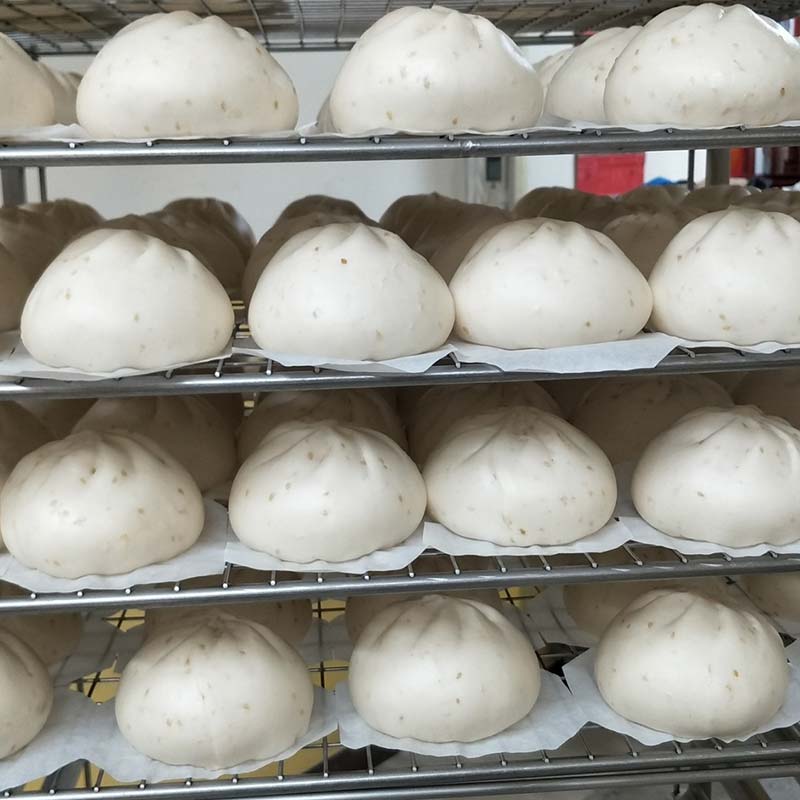
Although a fermentation cabinet may look simple, it is actually one of the most critical pieces of equipment for ensuring product consistency.
Common issues:
• Large temperature differences between upper and lower layers → Uneven expansion
• Humidity too low → Dry skin and cracking
• Humidity too high → Surface collapse
• Uneven airflow → Products on the same rack develop differently
• Frequent door opening → Slow recovery of temperature and humidity
Koten Bun Steaming Machine: Making the steaming stage more stable and more controllable
Once the upstream processes (forming and fermentation) are properly adjusted, achieving batch-to-batch consistency relies heavily on the stability of the steaming stage. Koten’s commercial bun steaming machines are widely adopted by central kitchens and food manufacturers because they make the steaming process more predictable and consistent.
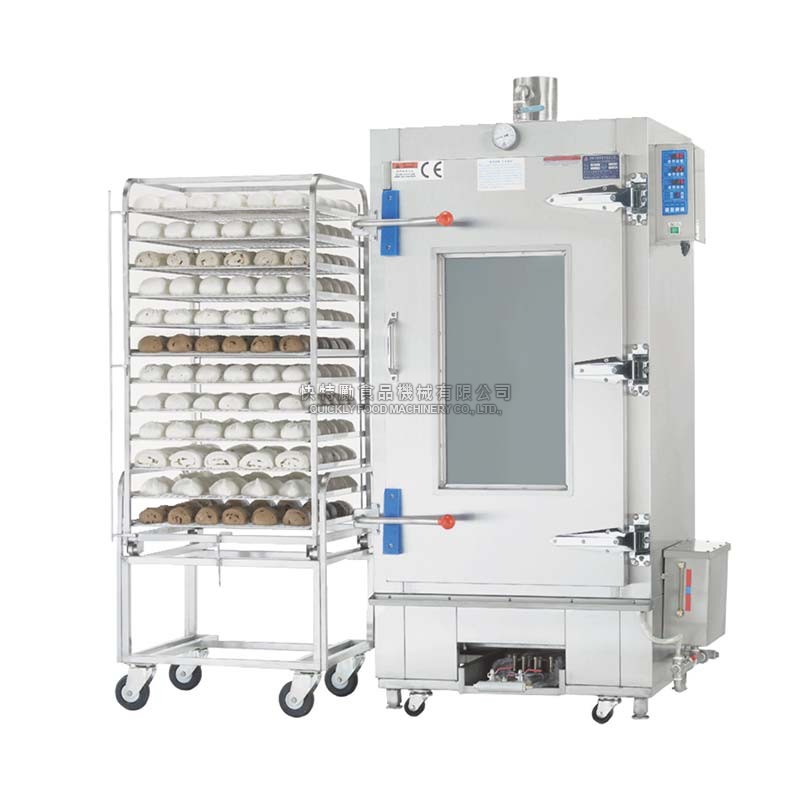
1. High steam output — boiling in just 3 minutes
Rapid heating and stable steam supply prevent inconsistent expansion such as “some rise, some collapse.” This makes steaming time easier to standardize and ensures consistent height and appearance across each batch.
2. Uniform steam distribution for more consistent expansion
Even steam flow prevents localized overheating or under-steaming, significantly reducing variability across full trays or racks—especially important in mass production.
3. Saves gas, time, and labor
Efficient boilers and effective insulation help reduce operating costs while shortening steaming time—ideal for high-volume commercial and factory environments.
4. Durable stainless steel construction — safe and easy to clean
The exterior stays cool, the interior has no dead corners, and the overall build is highly durable, meeting the hygiene and safety requirements of food manufacturers.
Koten’s bun steaming machines make the steaming stage more stable and controllable, working in harmony with upstream forming and fermentation settings to deliver greater consistency and efficiency across the entire production line.
Frequently Asked Questions (FAQ)
Q1: Even with the same recipe, why do finished products still look different every day?Variations in mass production are usually not caused by the recipe, but by multiple factors such as environmental temperature and humidity, dough condition, equipment settings, and production rhythm. These differences may not be obvious in a single day, but will be amplified during long-term mass production, resulting in inconsistent height, appearance, and texture.
Q2: Does the fermentation cabinet really affect proofing results? Is the difference that significant?
Yes. The temperature, humidity, airflow uniformity, and door-opening frequency of a fermentation cabinet all directly affect dough expansion and surface quality. A temperature difference of just 1–2°C between upper and lower racks can cause products to rise unevenly. To achieve consistency, food manufacturers must standardize and control fermentation conditions.
Q3: Our finished products often vary in height. Is the bun-forming machine the problem?
Not necessarily equipment failure—more often the issue is *non-standardized parameters*.
For example: dough sheet thickness, filling pump speed, screw rotation speed, and forming speed—any minor adjustment by different operators can lead to variations in height, weight, and appearance.
By establishing fixed parameter charts and limiting adjustment ranges, companies can ensure consistent results across all shifts.
------------------------------------------------------------------------------------------------------------------------------------------------------
The article is for reference only. For actual machine specifications and functions, please refer to official information provided by Koten.