

How to Choose the Right Hot Food Display Equipment: A Complete Guide to Holding Cabinets × Display Warmers × Food Showcases
Contents
1. Why do finished products vary daily even with the same recipe and equipment?
In large-scale food production, the challenge is not “making the product,” but ensuring that *every batch* looks and tastes the same.
The most common factors causing inconsistency include:
• Climate changes affecting dough and fermentation speed
• Variations in dough condition
• Non-standardized equipment settings
• Subtle differences in dough hydration and temperature
As production volume increases, even tiny variations become amplified and turn into quality issues.
2. Factor 1: Ambient Temperature & Humidity — the “invisible changes” most food factories overlook
The differences between summer and winter conditions can be much greater than expected.
• Summer: Dough becomes softer; fermentation time shortens
• Winter: Dough becomes firmer; fermentation speed slows down
• Humidity changes: Affect dough hydration and surface condition
• Rainy days: Flour moisture content naturally increases
Even when using the same equipment, changes in the external environment increase the load on the proofer and cause significant variation in dough expansion speed.
3. Factor 2: Dough Condition — even slight differences in hydration, temperature, or resting time can change the final product
Among all processing steps, “dough condition” is often the most overlooked yet the most critical factor affecting quality.
Unlike machine parameters, dough condition is not always obvious, but even tiny deviations will directly affect appearance, texture, and proofing volume.
① Small variations in hydration can completely change the dough’s behavior
Many assume that a 1% difference in hydration is insignificant, but in mass production, that 1% is enough to alter the dough’s entire characteristics.
• Higher hydration: Dough becomes stickier, tends to stretch during filling, and the wrapper and filling may not adhere well.
• Lower hydration: Dough becomes drier, leading to cracking or rough surfaces after steaming.
These small differences may seem minor, but once amplified inside the steamer, they result in batches with inconsistent appearance and texture.
② Dough temperature is the variable that “changes quietly”
A 1–2°C difference in dough temperature is enough to alter fermentation speed.
This explains why:
• Products from morning and evening shifts often look different
• Proofing height varies between sunny and rainy days
• Products often “don’t rise well” in winter
Dough temperature acts like a “metronome for fermentation”—when the rhythm changes, the results naturally change as well.
4. Factor 3: Non-standardized equipment settings — the primary cause of inconsistent product size
If parameters on bun forming machines, shaping equipment, and supporting systems are not standardized, adjustments made by different operators will create significant variations:
• Different dough sheet thickness → Variation in final product height after steaming
• Filling pump not synchronized → Inconsistent product weight
• Changes in forming speed → Differences in appearance and internal structure
• Screw speed not synchronized with conveyor belt → Poor wrapping quality
The most common issue in food factories is:
The key to inconsistent products is not “who operates the machine,” but whether the environment and processing conditions are aligned.
5. Factor 4: Unstable fermentation conditions — the true bottleneck of product consistency
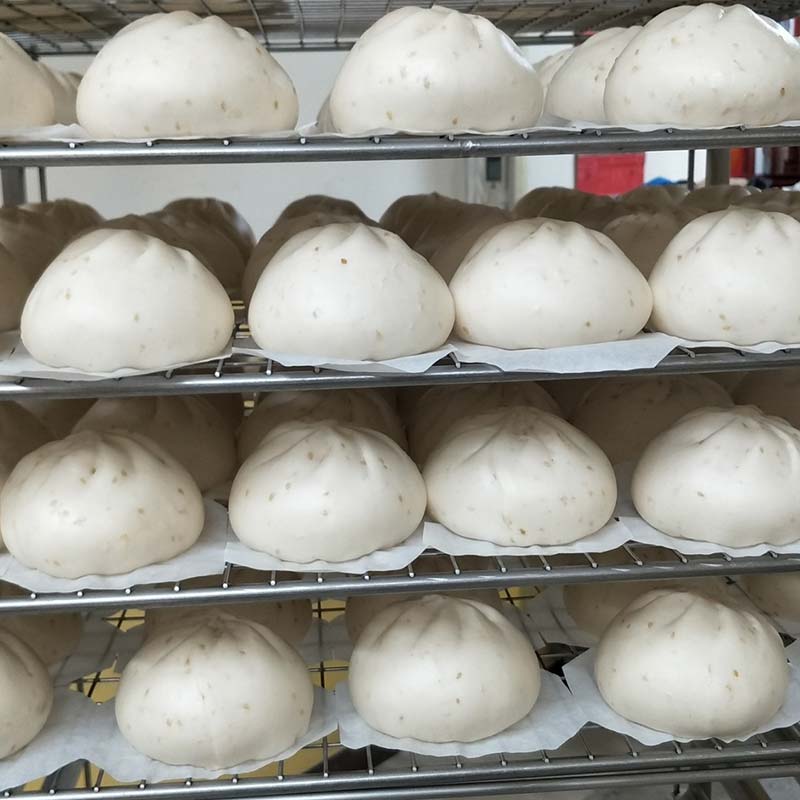
The fermentation cabinet may look simple, but it is actually the most critical equipment for achieving product consistency.
Common issues:
• Large temperature difference between upper and lower layers → Uneven proofing height
• Humidity too low → Dry skin and surface cracks
• Humidity too high → Surface collapse
• Uneven airflow channels → Different proofing results on the same rack
• Frequent door opening → Slower temperature and humidity recovery
KTL Bun Steamer (Bun Machine): Making the steaming stage more stable and fully controllable
Once the upstream processes (forming and proofing) are properly adjusted, achieving true batch-to-batch consistency depends heavily on the stability of the steaming stage. This is why many central kitchens and food factories choose the KTL commercial bun steamer — it makes steaming more predictable and better controlled.
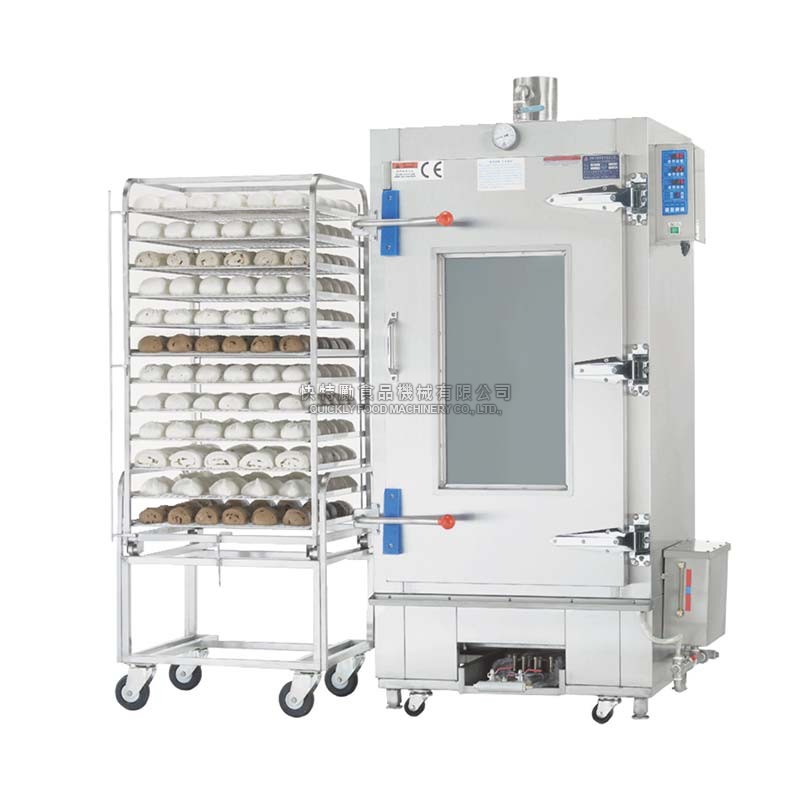
1. High steam output — boiling in just 3 minutes
Fast heating and steady steam supply prevent issues such as inconsistent rise (“some tall, some flat”). This allows more accurate steaming times and improves uniformity in product height and appearance.
2. Even steam distribution for more consistent proofing
Uniform steam prevents localized overheating or under-steaming. This is especially important for large-volume production, reducing variation across the entire tray.
3. Saves gas, time, and labor
Its efficient boiler and insulation reduce operational costs and shorten steaming times — ideal for busy commercial or factory environments.
4. Durable, hygienic stainless steel structure
The exterior remains cool to the touch, the interior has no dead corners, and the construction is highly durable — meeting strict food industry sanitation requirements.
The KTL bun steamer stabilizes the steaming process and works seamlessly with the forming and proofing stages, improving line-wide consistency and production efficiency.
Frequently Asked Questions (FAQ)
Q1: Why do our products look different every day even though the formula is the same?In large-scale food production, quality variations are usually not caused by the formula itself. Instead, they come from multiple factors such as environmental temperature and humidity, dough condition, equipment settings, and workflow rhythm. These variations may seem minor within a single day, but become amplified during long-term production, causing differences in product height, appearance, and texture.
Q2: Does the fermentation cabinet really affect proofing? Is the impact that big?
Yes. The fermentation cabinet’s temperature, humidity, airflow uniformity, and door-opening frequency directly affect dough expansion and surface quality. A temperature difference of just 1–2°C between upper and lower shelves may already cause “uneven rise.” To achieve consistency, food factories must standardize and control fermentation conditions.
Q3: Our products often vary in height — could it be a bun machine problem?
Not necessarily equipment failure. More often, the cause is **non-standardized parameters**.
For example: dough-skin thickness, filling pump speed, screw rotation speed, forming speed — if any operator makes small adjustments, the results may differ in height, weight, or appearance.
By establishing fixed parameter charts and limiting adjustment ranges, factories can achieve consistent results across different shifts.
------------------------------------------------------------------------------------------------------------------------------------------------------
Content is for reference only. Actual machine functions and applicability are subject to information provided by KTL.